
Photography and the Illusion of a Frozen Reality
An exploration of photography’s relationship with time, illusion, and interpretation, where neither objectivity nor pure subjectivity can fully account for what an image reveals, or conceals.
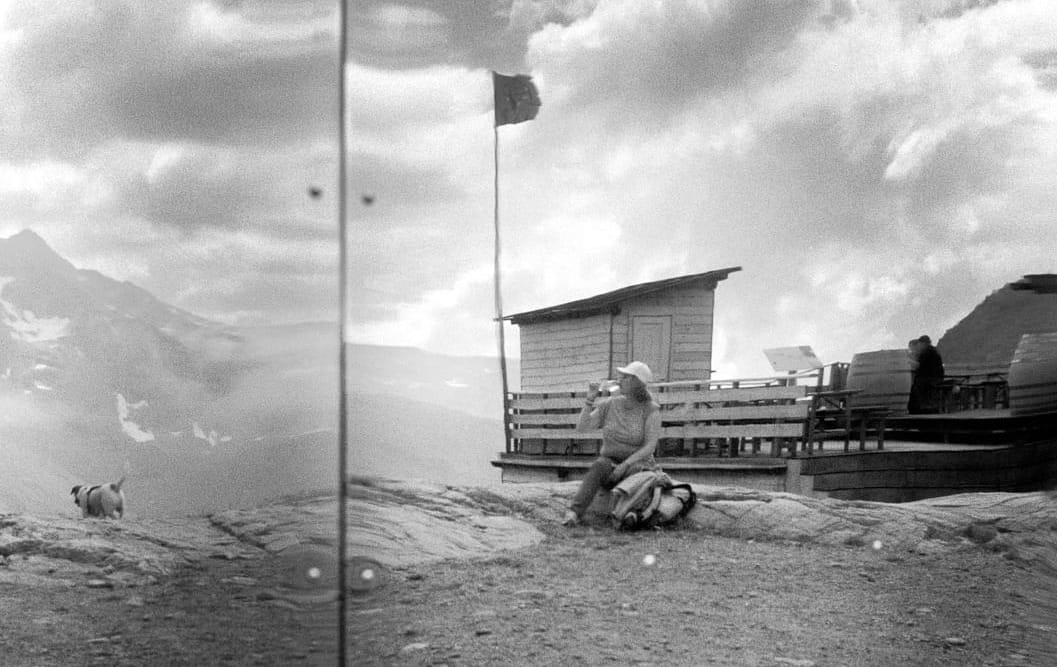
Far beyond being a mere parameter of exposure, time is intimately bound to photography.
Among its many facets, photography’s relationship with time unfolds through the capture of moments -hundredths or thousandths of a second of reality- offered back to us as a frozen fragment.
For a time, the question arose as to whether this representation of a fraction of reality was truly a representation of reality itself.
The answer to this question indeed -the very understanding of the photographic act- oscillates between two extremes, between two “traps”: the objective and the subjective.
The first, which stands at the very opposite of artistic creation, considers photography as a means of faithfully reproducing reality, of indexing it, an objective recording of reality at a given moment in time. Photography would then be nothing more than a photocopy of the real.
This “objectivist” vision of the world, seen through the “lens,” is today a conception of photography that has been largely dismantled, and one that no one truly defends anymore.
“Reality is a deception, and photography exists to prove it.”
— Unknown author
Scientific photography or the reproduction of works of art -perhaps the most accomplished attempts at faithfully reproducing reality- will always suffer from optical biases induced by:
- the equipment itself (optical formulas of lenses, processing algorithms, etc.),
- printing and display media (ink, screens, paper, film, etc.),
- and the human eye, which intervenes repeatedly throughout the reproduction process: during the act of shooting, the choice of lighting, printing, and even the choice of medium.
Today, we are all aware that the world is an interpretation we construct for ourselves, a personal and subjective interpretation of reality, even if we continue to persuade ourselves that we see it as it truly is.
Beyond visual reproduction, photography has often answered a desire to catalogue or record reality, more as an inventory or testimony of an era than as a faithful graphic reproduction of the real.
Certain photographic projects, such as the typological work undertaken by photographer August Sander, offer a clear example. Yet even here, when the intention is to reproduce a specific social reality, aesthetic biases are directly induced by the photographer’s vision and perception.
This photograph of a young bricklayer taken from that body of work is far removed from the objective representation of reality one might claim to pursue. On the contrary, the image possesses remarkable artistic strength. The gaze, anything but neutral, expresses sheer determination, all the more striking given the youth of the subject. A shaft of light animates and lightens the image of the boy carrying, like an Atlas, a stack of bricks that seems to weigh no more than a few feathers.
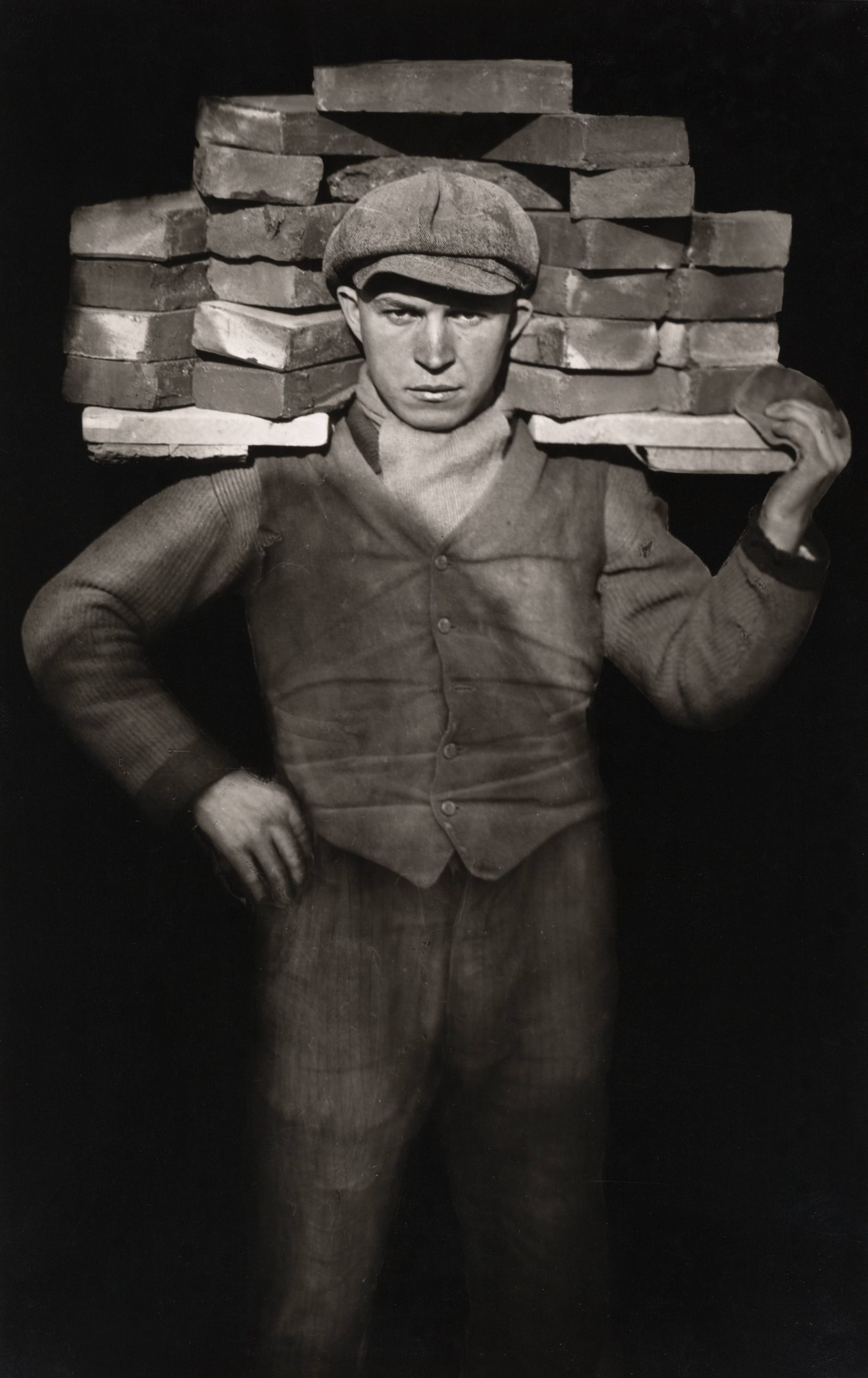
August Sander, Bricklayer, 1928.
When faced with a landscape photograph, we continue to think that nature is beautiful, even as we are fully aware that the photograph is not the mirror of the landscape itself. A gentle illusion, one we willingly indulge in and persist in believing to be reality, quite consciously.
This illusion that photography might be a representation of reality did not take long to lose its power to deceive. Charles Baudelaire had already fiercely attacked the fledgling medium for its inability to represent nature faithfully and objectively, which he considered the only true expression of art.
“I believe in nature, and I believe only in nature […]. I believe that art is and can only be the exact reproduction of nature […]. Thus, an industry that could give us a result identical to nature would be absolute art.”
A vengeful God granted the wishes of this multitude. Daguerre became their Messiah. And then they said to themselves: “Since photography gives us all the desirable guarantees of exactitude (they believe that, the fools!), art is photography.” From that moment on, vile society rushed forward, like a single Narcissus, to contemplate its trivial image upon metal."
Charles Baudelaire, The Salon of 1859
So much for photography presented as an objective representation of reality.
The other extreme is to conceive the photographic image as a purely, perfectly, and entirely subjective expression. Each image would then be laden with signs, all endowed with implicit and profound meanings, conveying the metaphor of a statement as personal and intimate as the photographer themselves.
This approach -an extreme one as well- is far more current today, and has given rise to exaggerated claims of authorship over photographs devoid of any real originality. Images in which their authors seem to read their entire personality, complete and absolute, so distinctive that the work should, at first glance, have been immediately attributable to them.
Art photography, conceived as a totally and perfectly subjective expression, is thus perceived as necessarily meaning something in every aspect.
Photography would inevitably convey a message, necessarily signify something, automatically be charged with meaning, an expression of intent. The educated viewer would read it by decoding the symbols chosen by the photographer, with every element becoming symbolic, since nothing would appear in the frame by chance…
Photography as the exclusive bearer of an artistic statement or an aesthetic that is merely the pure expression of our own subjective and carefully constructed version of reality? One may well doubt it.
Photography will always, nonetheless, be drawn from a concrete and tangible reality, but never the product of a fully conscious and deliberate conception by the photographer. More often than not, a photograph reveals its interest -artistic, comic, emotional, or symbolic- only at the stage of post-production, when the photographer reviews their images and discovers, almost by surprise, this or that compelling element.
Ultimately, is it not the unspoken part of a photograph that grants it its mystery, and with it, its appeal? Certainly, the photographer will have their own interpretation, analysis, and emotional response to their image. But is that the only possible reading, the only emotion the photograph is capable of conveying? Surely not. It is precisely what photography does not say that may resonate most deeply within us, because words, concepts, and ideas fall short of expressing the inexpressible.